Eric Takukam on Preserving Indigenous Culture, Raffia and Decolonising Digital Technology
Takukam’s story threads together ecology, technology, culture and disability rights, and at its centre, a commitment to resisting erasure.

This article is part of a series exploring Resistance as a Force for Change - in partnership with intersection, a borderless network visibilising people working on the frontlines of climate, social and racial justice. Through interviews and insight-led pieces, we examine how marginalised voices navigate, and challenge systems of power. They are not just about survival, but about the radical act of imagining something better. They reflect the complexity of what it means to resist: the weight of history, the imprint of culture, and the structural forces that shape our lives. Real change begins when we reckon with these truths, and choose to build from them.
Access the Audio Read version directly on Spotify for Creators.
I came across Takukam’s work through a community we’re both part of, Creatives for Climate. His post was a simple call out for connections - something I’ve been actively doing for the past year, and upon reading his few words and a quick review of his bio:
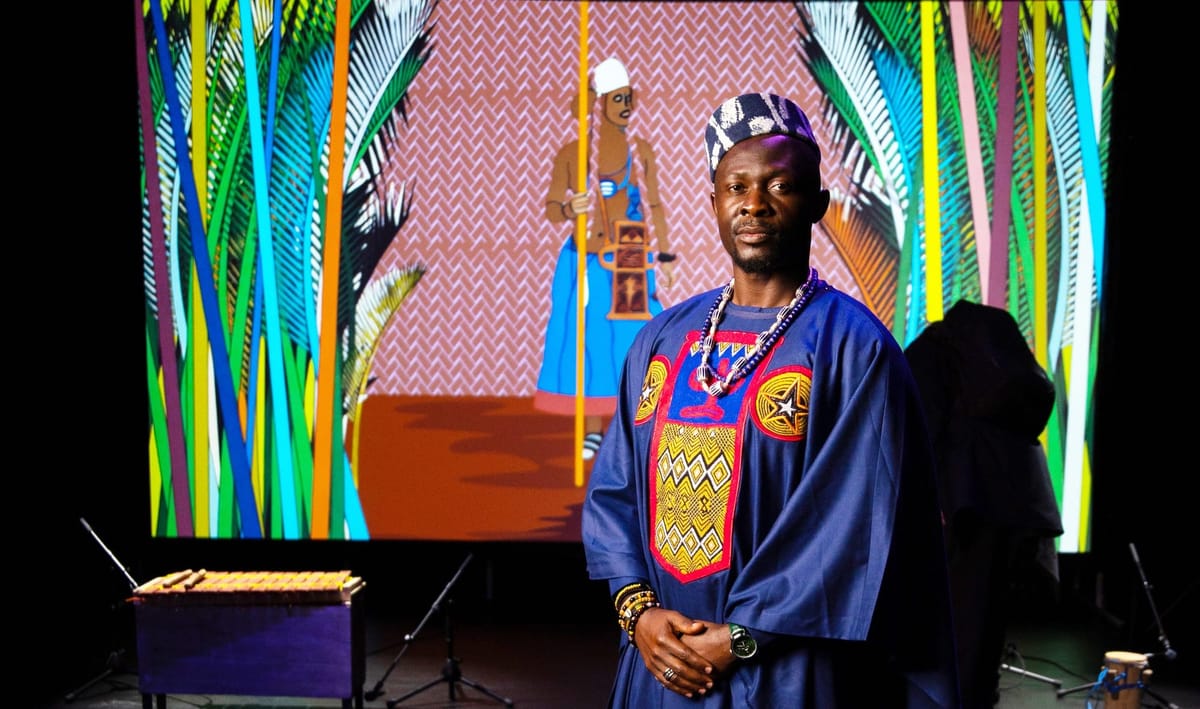
“Eric Takukam is a prominent digital artist residing in Douala, Cameroon. His work primarily focuses on a nostalgic reimagining of modern life, infused with his cultural heritage. It delves deeper, prompting us to reconsider the relationship between humans and nature, particularly how our current challenges might stem from human selfishness.”
I was hooked, and reached out to him to find out more about his work.
Takukam’s path has never been linear - it’s probably true for a lot of us. He started out in the advertising industry, working in creative agencies, but has always been an artist at heart - an “artivist”, as he self-describes. He’s an Indigenous artist from Cameroon’s Bamileke tribe - an ethnic group of Central Africa inhabiting the Western High Plateau, also known as the grassfields of Cameroon - but also a fashion designer, a digital pioneer, and a father to a son with a disability.
Takukam’ story threads together ecology, technology, culture, and disability rights, and at its centre, a commitment to resisting erasure.
The Bamileke people have carried Cameroon’s economy for generations. Known for preserving their cultural legacy, their knowledge and traditions are deeply tied to the raffia palm. But raffia isn’t just a plant; it’s the backbone of Bamileke identity. Raffia produces the wine drunk during weddings to seal a union, it underpins religious offerings, it forms the base of traditional textiles, and is central to Bamileke remedies. Economically, culturally, and spiritually, raffia is everything to the community and the country.
But raffia is disappearing. Agricultural burning is destroying the palms, turning land into desert and erasing Bamileke traditions in the process.
Without raffia, marriages can’t be celebrated in their full meaning, ancestral remedies slowly disappear, Bamileke medicine, clothing, and religious practice all wither. “Raffia is at the economic heart of Cameroon,” Takukam says. And yet, local authorities ignore the destruction happening before their eyes, letting an economy, spiritual and cultural practices slowly disappear.
No wonder Takukam has made it his mission to defend raffia. Through his We Are One, an organisation Takukam is developing, he’s working to push for legislation to ban its burning, while also building projects that centre raffia as both ecological and cultural heritage. He dreams of reforestation, documentaries and community storytelling that bring its importance to life, and reinvents raffia-based artisanal products for a global market. It’s, simply put, ecological resistance and cultural defence in one.
But Takukam’s activism doesn’t stop at protecting raffia and his ancestral knowledge, he’s also a digital artist who has oriented his practice around technology. “There are few African artists in the AI and tech space,” he says. His work is part of what he calls “Decolonising the digital” - which took its root from the theme of his research and residency for the Beyond Gravity festival 2025 in Dortmund.
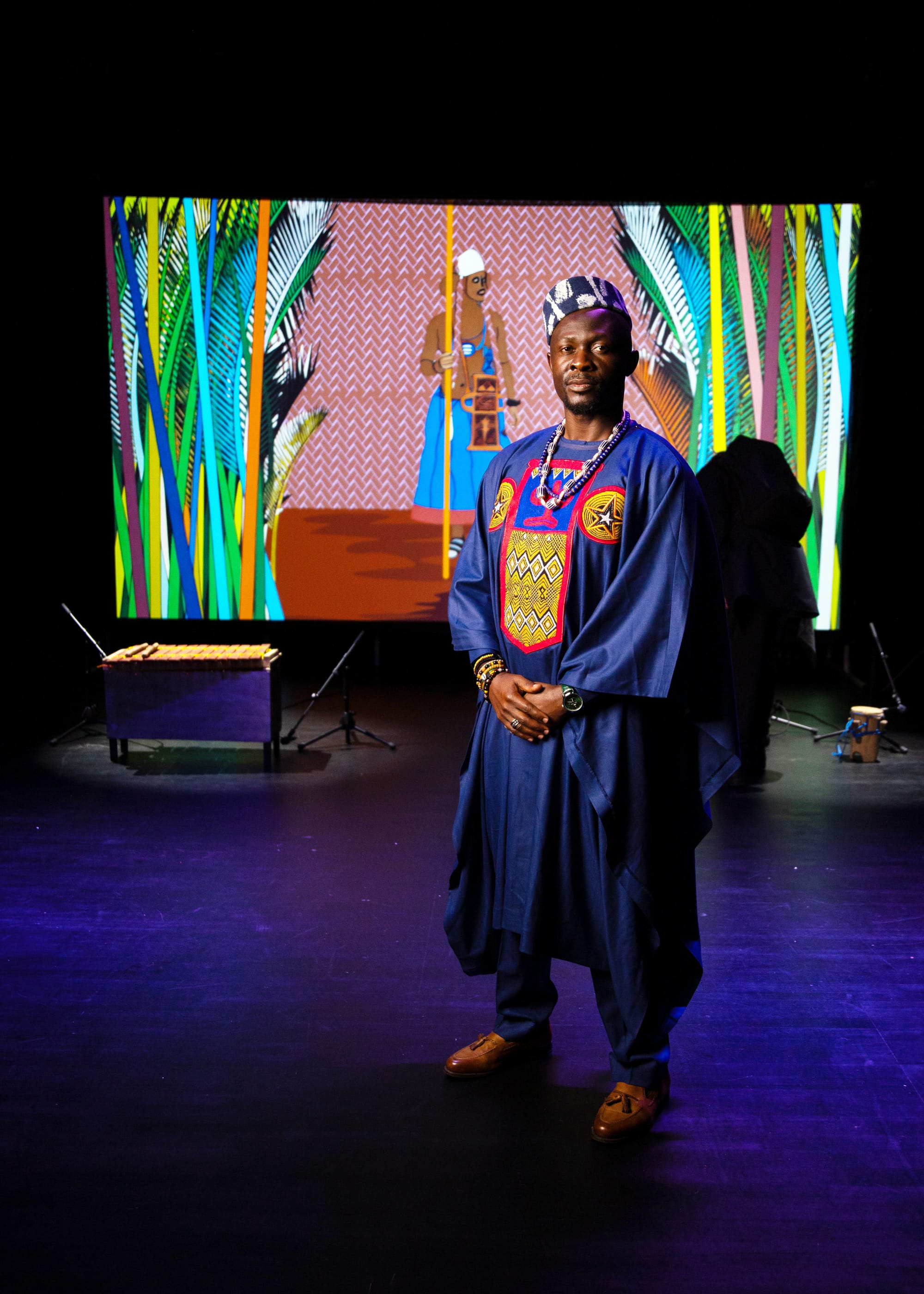
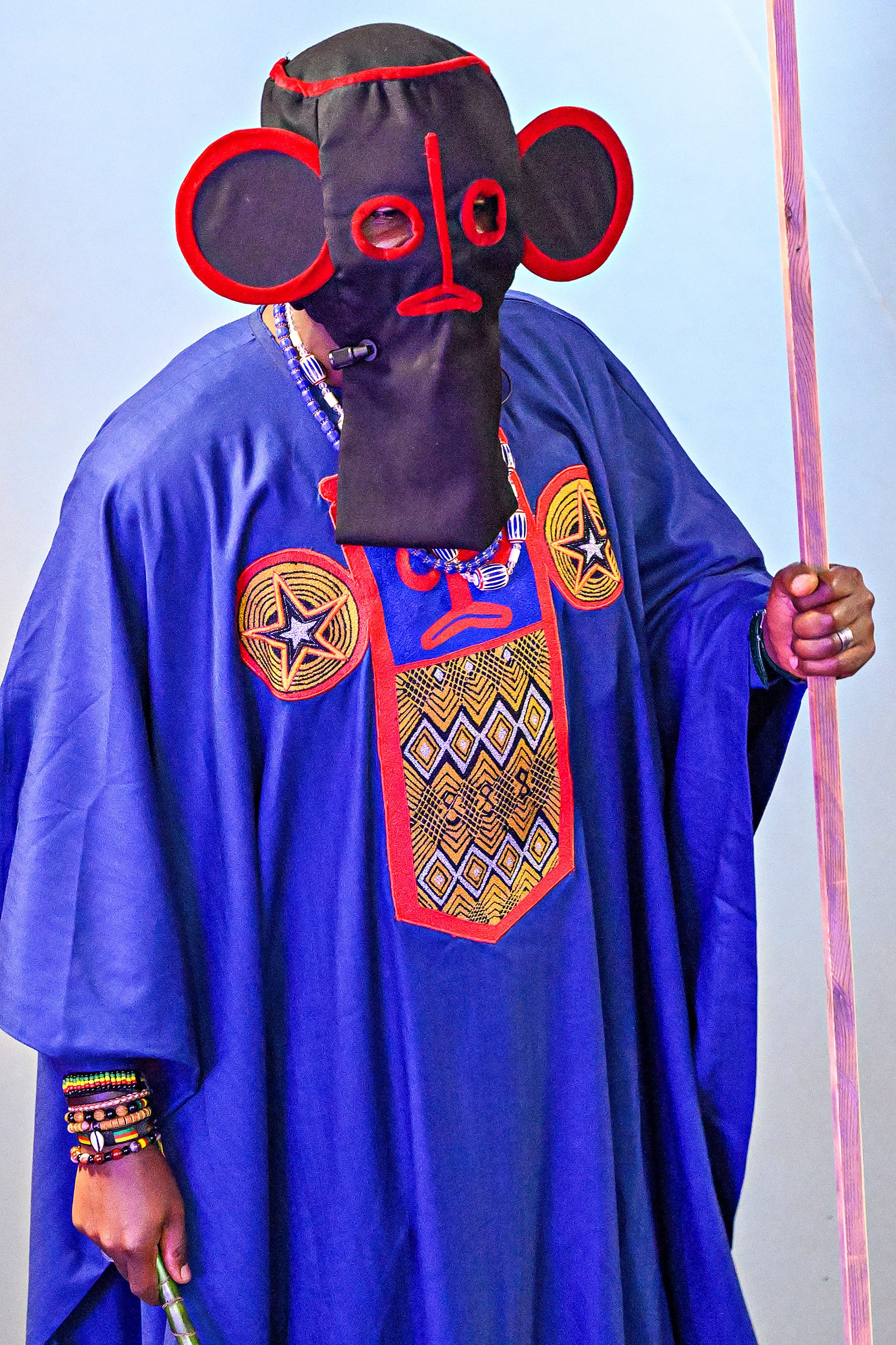
Left: EricTAKUKAM at Beyond gravity festival by Soren Meffert ; Right: Eric Takukam wears the Elephant mask, a symbol of the Bamileke community, at the opening of his KAM exhibition Suh Pepong (Bienvenue), performed at the Beyond Gravity festival in Dortmund (UK) in October 2025. Photo credit: Jan Schmitz
Digital decolonisation, primarily aims to make visible the stories, knowledge, and creations of Indigenous and marginalised peoples within digital spaces - seeking to rebalance representations and amplify voices that have long been excluded. It’s also an opportunity to propose a vision of technology rooted in their cultures and ancestral wisdom, reimagining the digital world through their own references and values.
With We Are One, Takukam runs workshops on digital inclusion in Cameroon, introducing young people and community leaders to the tools and opportunities that can open new possibilities. Takukam argues that it’s about creating a human legacy in the digital age, so that the African continent doesn’t once again find itself excluded from that endless table.
Takukam’s fight is also personal. He lives with ADHD and hypersensitivity, and his son has autism - diagnoses rarely recognised and discussed in Cameroon and many Global Majority spaces still. These are, unfortunately, not officially considered disabilities, and are more often than not, dismissed as laziness, madness, or worse - leaving little awareness among families, almost no training among doctors, and zero government support. “All these things are considered white people’s problems in Cameroon,” he says, “but they’re not.” Stigma runs deep, mental health services are severely underfunded, and leading some to take extreme measures.
Takukam refuses that silence. He’s organised gatherings around autism awareness, designed sculptures to mark World Autism Day, and is working to build more regular forums for conversation. He wants to develop policies to protect neurodivergent people and create art workshops to stimulate autistic children. He and his collective are budgeting for these projects, pushing against the ignorance and stigma with creativity and persistence.
As an artist, Takukam defends African culture across various mediums: textiles, digital installations, and storytelling. He sees himself as both a guardian of Bamileke heritage and a pioneer for Africa’s place in the digital age. For him, resistance means defending raffia as the root of Bamileke life, building inclusion so young people aren’t left out of future economies, and demanding recognition and care for neurodivergent communities.
His vision is plural and intersectional but it comes down to a simple truth: decisions cannot continue to be made with people left out from key decisions and measures. Heritage, culture, ecology, health and dignity must be part of the same framework. Raffia may take 18 months to grow, but as Takukam works to preserve and replant it, he’s also planting something bigger: a decolonised digital future, rooted in the richness of African traditions and culture, and it’s a big task in itself.
You can find out more about Eric Takukam’ work online: https://erictakukam-art.com/